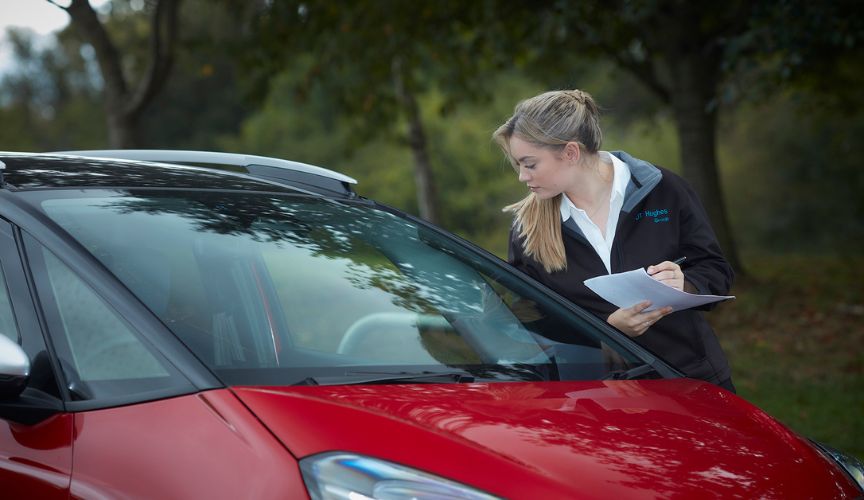
Nobody looks forward to their MOT.
You know it is due, you know the car needs it, and somewhere in the back of your mind you are already rehearsing the phone call that starts with “so, we found a few things.”
But here is a number that might change how you think about it.
Around 72% of cars pass their MOT first time — and the failures that catch people out most often are exactly the things you can check from your own driveway.
This guide walks you through everything that is checked in an MOT test, everything they skip, what the results actually mean, and the 15-minute walk-around that could save you a retest fee and a wasted morning.
No jargon. No scare tactics.
At a Glance
How long it takes
About 45 to 60 minutes for a standard car
What it costs
Maximum £54.85, the fee is capped by law
What gets checked
Lights, brakes, tyres, steering, emissions, and more
What does NOT get checked
Engine, clutch, gearbox, air conditioning
Understanding your results
Dangerous, major, minor, or advisory — each means something different
If you fail
Not a disaster, you have options and rights
Electric cars
Yes, they need an MOT, but the test is different
How to prepare
A 15-minute walk-around covers the most common fail points
The Basics: How Long, How Much, and When Is Yours Due?
The quick facts:
- Time: 45 to 60 minutes for a standard car
- Cost: Maximum £54.85 — that fee is a government-set cap. Garages can charge less, but not more
- When: Every year once your vehicle is three years old
- Check your date: The GOV.UK MOT status checker tells you instantly, or book directly with JT Hughes
How long does an MOT take? For a Class 4 vehicle (cars and light vans), expect 45 to 60 minutes. If the tester finds issues that need a closer look, it may take a little longer, but the test itself follows a structured sequence.
The One-Month-Early Rule
Most people do not know this: you can book your MOT up to one month before the expiry date and still keep the same anniversary date for next year.
That means you can plan ahead, avoid the last-minute scramble, and still keep your renewal cycle tidy.
It is the kind of thing we wish more people knew about before they end up ringing us on the day their certificate expires.
Pro tip: Book your MOT up to one month before the expiry date and you keep the same anniversary date for next year. March and September are the busiest months for MOT bookings. Book early to beat the rush.
MOT exemption applies to vehicles that are more than 40 years old.
This is a rolling date — in 2026, it covers vehicles first registered before 1 January 1986.
If your car falls into that category, it does not need an MOT, though keeping it roadworthy is still a legal requirement.
What Does an MOT Check? The Full List
An MOT test checks around a dozen major categories of your car’s safety and roadworthiness.
So what does an MOT check, exactly? Here is the full list.
| What They Check |
What the Tester Looks For |
| Lights and signals |
All bulbs working, correct alignment, lenses undamaged |
| Steering |
Power steering function, rack condition, wheel bearings |
| Suspension |
Shock absorbers, springs, joints, bushes |
| Brakes |
Efficiency, balance across wheels, disc and pad condition, handbrake |
| Tyres and wheels |
Minimum 1.6mm tread depth, condition, no bulges or cracks |
| Exhaust and emissions |
Leaks, catalytic converter, emissions within limits |
| Bodywork and structure |
Corrosion, damage, sharp edges near pedestrians |
| Seatbelts |
All belts present, buckles working, webbing intact |
| Windscreen and wipers |
Cracks in the visibility zone, wiper condition, washer operation |
| Mirrors |
Condition, security, correct positioning |
| Horn |
Does it work? |
| Fuel system |
No leaks, cap secure |
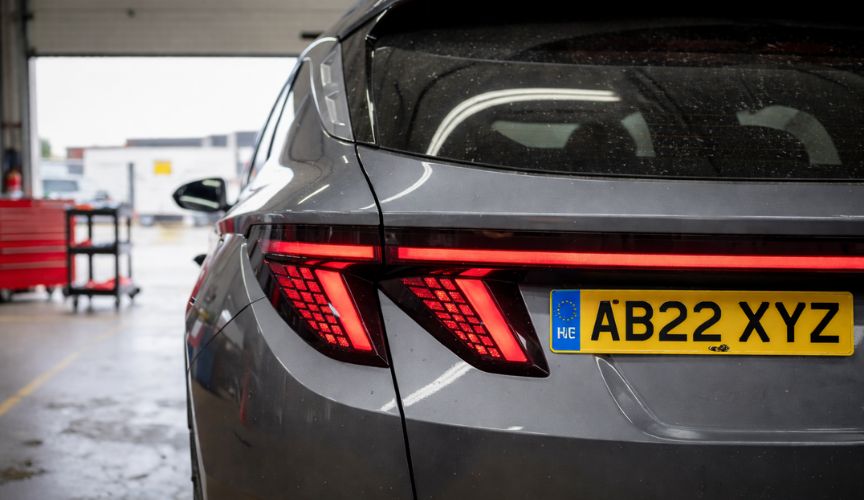
| Number plates |
Legible, correctly spaced, lights working |
| Doors and seats |
Latches secure, seats adjust and lock properly |
| Vehicle identification |
VIN plate present and legible |
Important: An MOT is a safety check, not a service. It confirms your car meets minimum safety standards on the day of the test. It does not replace regular servicing.
What our technicians see most often is that the failures which surprise people are the small things.
A blown indicator. A worn wiper blade.
A number plate light that has been out for months.
Not the big, expensive items. The ones hiding in plain sight.
The full list looks long, but most of it is checking that things work the way they should.
What the MOT Does NOT Check
Your engine could be on its last legs — and the car would still pass its MOT, provided the safety and emissions standards are met on the day.
This surprises more people than it should.
The MOT is a safety and environmental check, not a mechanical health assessment.
The tester will not look at any of the following:
- Engine internals
- Clutch
- Gearbox (manual or automatic)
- Air conditioning
- Timing belt or cam belt
- Battery condition (beyond whether the car starts)
- Oil level and condition
- Sat nav or infotainment
“Does your oil get checked in an MOT?” is one of the most common questions we hear.
The answer is no. Oil is checked during a service. The MOT checks something different entirely.
MOT vs Service — what's the difference?
An MOT confirms your car meets minimum safety standards on the day of the test. A service checks mechanical health and keeps it reliable for the year ahead. Skip one, and the other cannot cover the gap.
And that is exactly why regular servicing matters alongside your MOT.
Understanding Your Results: Advisories, Failures, and What They Mean
You walk out of the MOT with a certificate and a list of items you are not entirely sure how to read. You are not the only one.
If you have ever walked out of an MOT with an advisory on the certificate, you are in the majority, not the minority. Since May 2018, results fall into four categories: dangerous, major, minor, and advisory.
Each means something different.
Dangerous Defects
A dangerous defect means a direct and immediate risk to road safety.
But if you are driving an older vehicle and suspect something serious, arranging backup transport before the appointment is worth the peace of mind.
Warning: If your vehicle receives a dangerous defect, your MOT certificate is immediately invalidated. You cannot legally drive it on a public road. This is rare, but knowing about it in advance means you can plan.
Major Defects
- A major defect means the car has failed
- The issue is serious enough to affect road safety or the environment, but it is not an immediate danger
- The car must be repaired and retested before it can pass
Minor Defects
A minor defect is noted on the certificate, but the car still passes.
It should be repaired in due course, but it does not prevent you from driving.
Do I Actually Need to Fix the Advisories?
Nobody forces you to. An MOT advisory is not a fail.
It is a heads-up — something the tester noticed that is not a defect now, but could become one.
Think of advisories as your car’s early warning system.
Fix them on your schedule, before they become failures on someone else’s.
The four MOT result categories:
- Dangerous — immediate risk, certificate invalidated, cannot drive
- Major — failed, must repair and retest
- Minor — noted on certificate, car still passes
- Advisory — not a defect yet, but worth watching
What Happens If Your Car Fails
You get the call from the garage. Your car has failed its MOT.
Your stomach drops. Your mind starts doing the maths before anyone has told you what is wrong.
Deep breath. An MOT failure is not a disaster. It is a to-do list.
You have options for retesting, you are never obligated to have repairs done at the testing station, and for most failures you can still drive the car while you arrange the work.
Can You Still Drive It Home?
- If the failure is a major defect and your previous MOT certificate has not expired, you can drive the car while you arrange repairs
- If it is a dangerous defect, your MOT certificate is invalidated immediately and the car cannot be driven on a public road
- If the car stays at the garage and is retested there, the partial retest is free
- If you take it away and bring it back within 10 working days, a partial fee may apply
- You can take the fail certificate to any other garage for the work and bring it back for the retest — you are never locked in
For major defects, the testing station will issue a fail certificate listing exactly what needs fixing.
Your Right to a Second Opinion
This is the part nobody talks about openly. Some drivers feel pressured into accepting repair quotes at the testing station immediately after a fail.
The car is there, the clock feels like it is ticking, and the quote lands before you have had time to think.
What we tell our customers:
- Our technicians walk you through what needs doing, what it involves, and what it costs — before any spanners come out
- You are always entitled to take your car elsewhere for repairs. That is your right
- Ask any garage to separate what is needed to pass from what is recommended for longevity — then decide without time pressure
Pro tip: You can check any MOT testing station's pass and fail rates on the GOV.UK MOT checker. If a garage's fail rate is dramatically different from the national average, that is worth knowing before you book.
The MOT test cost is capped at £54.85. What varies is the repair cost — and you control where those repairs happen.
Electric and Hybrid Cars: What Is Different?
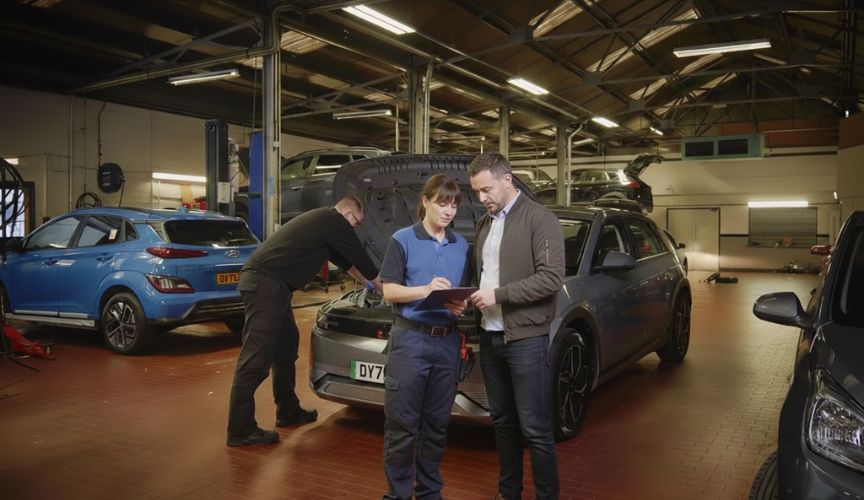
Yes, electric and hybrid cars need an MOT once they are three years old, just like any other car. If you drive an EV and assumed you were exempt, you are not the first person to think that.
EV MOT — what stays, what changes:
- Same: Lights, brakes, tyres, steering, suspension, bodywork — all checked
- Skipped: Exhaust emissions (no exhaust to test)
- Watch out for: Tyre wear and brake corrosion (see below)
EVs have patterns that petrol and diesel cars do not. Analysis of over 815 million DVSA records by MoneySupermarket shows that tyre issues dominate EV MOT failures. The reason is physics:
- Electric motors deliver torque instantly
- Battery packs add significant weight
- Both accelerate tyre wear
- Regenerative braking means the traditional brake pads and discs are used less frequently
- Brake components that sit unused for long periods can seize or corrode rather than wearing smoothly
That sounds like good news for brakes, but it can cause a different problem: corrosion.
Our technicians work on EVs every week. This is not a new thing for them.
If you drive an electric car, an MOT is not something you can skip.
What the MOT does NOT check on EVs:
Battery health, charging system, and range. High-voltage cables are visually inspected only.
What most EV owners do not realise until their first MOT is that tyre condition matters more on an electric car than on anything else we test.
Pro tip: EV owners: check your tyre tread more frequently than you think you need to. The combination of instant torque and battery weight means EV tyres wear faster than their petrol or diesel equivalents.
How to Prepare: The Pre-MOT Walk-Around
You do not need to be a technician to spot the most common MOT fail points.
A 15-minute walk-around your car, checking lights, tyres, wipers, washers, and number plates, covers the defects that account for the majority of failures.
Pro tip: The single most common reason cars fail their MOT is a blown bulb. A replacement costs a few pounds and takes minutes. Check every light on your car the day before your appointment.
Nobody is asking you to get under the car with a torch.
This is about walking around it with your eyes open.
Run through this list the day before your appointment:
1. Lights
- Every external bulb. Headlights on dipped and main beam. Rear lights. Brake lights. Indicators. Fog lights. Number plate lights.
- Get someone to stand behind the car while you press the brake pedal.
This one check alone covers the defect category that accounts for roughly 30% of all MOT defects.
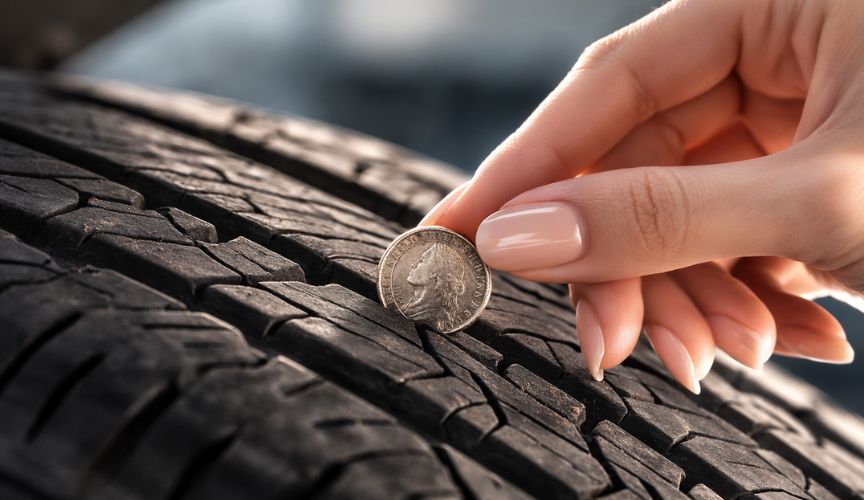
2. Tyres
Check tread depth on all four tyres. The legal minimum is 1.6mm.
- The 20p coin test works: insert a 20p coin into the tread groove
- If the outer band of the coin is visible, the tread is too low
- Look for bulges, cracks, or uneven wear — any of these can cause a fail
3. Wipers and washers
- Are the wiper blades smearing, splitting, or missing sections? Replace them.
- They cost a few pounds and take minutes to fit.
- Is the washer fluid topped up? Do the jets actually spray?
Silliest thing in the world to fail on.
4. Windscreen
- No cracks larger than 10mm in the driver's direct line of sight (Zone A)
- No cracks larger than 40mm anywhere in the swept area
- If you have been living with a chip that has started to spread, now is the time to deal with it
5. Number plates
Clean, legible, correctly spaced. Front and rear.
Check the number plate lights work while you are at it.
6. Horn, mirrors, seatbelts
- Press the horn. Does it work?
- Check all mirrors are secure and uncracked.
- Buckle and unbuckle every seatbelt. Check the webbing for fraying.
7. Dashboard warning lights
- Turn the ignition on.
- If the airbag light, ABS light, or engine management light stays illuminated, that can cause a fail.
- If a warning light is on, get it checked before the MOT appointment, not during it.
An MOT checklist like this takes 15 minutes. It will not catch everything.
But it covers the defects that trip up the most cars, and it means you walk into the appointment knowing you have done what you can.
Most of our customers who run through something like this before they come in tell us the same thing: it took the edge off the waiting.
Local Note: Shropshire and Mid Wales
If you are based in Shropshire or Mid Wales, there are a few things worth bearing in mind.
- Rural B-roads around the county can accelerate suspension wear.
- Potholes, uneven surfaces, and farm traffic all take a toll over time.
- Winter salt and grit on Shropshire's roads can cause corrosion, particularly on brake lines and subframes.
- If your car lives outside, this is worth mentioning to your technician before the test.
- March is the busiest booking month across the UK, and local workshops are no exception.
- Booking a month early avoids the rush
- JT Hughes have MOT testing centres located at all our showrooms in Shrewsbury, Telford and Newtown, Powys, Mid-Wales.
Frequently Asked Questions
| Question |
Answer |
| What is the maximum you can be charged for an MOT? |
The legal maximum for a Class 4 MOT (cars) is £54.85. Many garages charge less. |
| Can you drive without a valid MOT? |
No. Driving without a valid MOT is illegal unless you are driving directly to a pre-booked MOT appointment. You risk a fine of up to £1,000. |
| What do most cars fail their MOT on? |
Lighting and signalling defects account for roughly 30% of all MOT defects, the single largest category. Suspension and brakes are next. |
| Does your oil get checked in an MOT? |
No. Engine oil level and condition are not part of the MOT test. Oil is checked during a service, not an MOT. |
| How far in advance can you book your MOT? |
You can have your MOT done up to one month before the expiry date and still keep the same anniversary date for next year. |
| Is there an MOT for electric cars? |
Yes. Electric cars need an MOT once they are three years old, just like petrol and diesel cars. The test skips the exhaust emissions check but everything else applies. |
| Should I clean my car before an MOT? |
It is not a requirement, but clean headlights, mirrors, and number plates make the tester's job easier and ensure nothing is obscured during the inspection. |
Your MOT is coming. Now you know what is checked, what is not, what the results mean, and the 15-minute walk-around that could make the difference between a pass and a wasted morning.
It is not a mystery. It is a checklist — and now you have seen every item on it.
If yours is due and you would rather go in prepared than cross your fingers, our technicians across Shrewsbury, Telford, and Newtown can talk you through it.
Written by the JT Hughes Service Team. Our technicians carry out thousands of MOTs each year across our Shrewsbury, Telford, and Newtown workshops. Last updated: February 2026.
This article is for general information only and does not constitute legal or technical advice. MOT testing standards and fees are set by DVSA and may change. Always check GOV.UK for the latest official guidance.