You have been looking at electric cars.
The prices still feel high.
The grant headlines keep changing.
And somewhere in the back of your mind, you are not quite sure any of it applies to someone in your position.
You are not alone in that feeling.
It is the question we hear most often from people walking into our showrooms right now.
“Can I actually afford to go electric?”
Most people expect the answer to be no. It is closer to yes than they think.
Between the government’s electric car grants, tax breaks for company car drivers, salary sacrifice schemes, and the sheer difference in running costs, many of the drivers we speak to are now paying less for an EV than they were for petrol.
Not in theory. In practice. Every month.
This guide walks through every incentive available to UK drivers in 2026.
What each one is worth. Who qualifies. How to access it.
By the end, you will know exactly which incentives apply to your situation, how to stack them together, and what the real monthly number looks like for you.
No jargon. No sales pitch. Just the numbers, from people who help drivers make this switch every week.
At a Glance
Electric Car Grant
Up to £3,750 off a new EV
EV charger grant
Up to £350 towards a home charger (£500 from April 2026)
Salary sacrifice
30-60% savings vs personal leasing
Company car BIK
3% tax rate vs 25%+ for petrol
Road tax (VED)
£10 in year one for zero-emission cars
Workplace Charging
Up to £500 per socket for employers
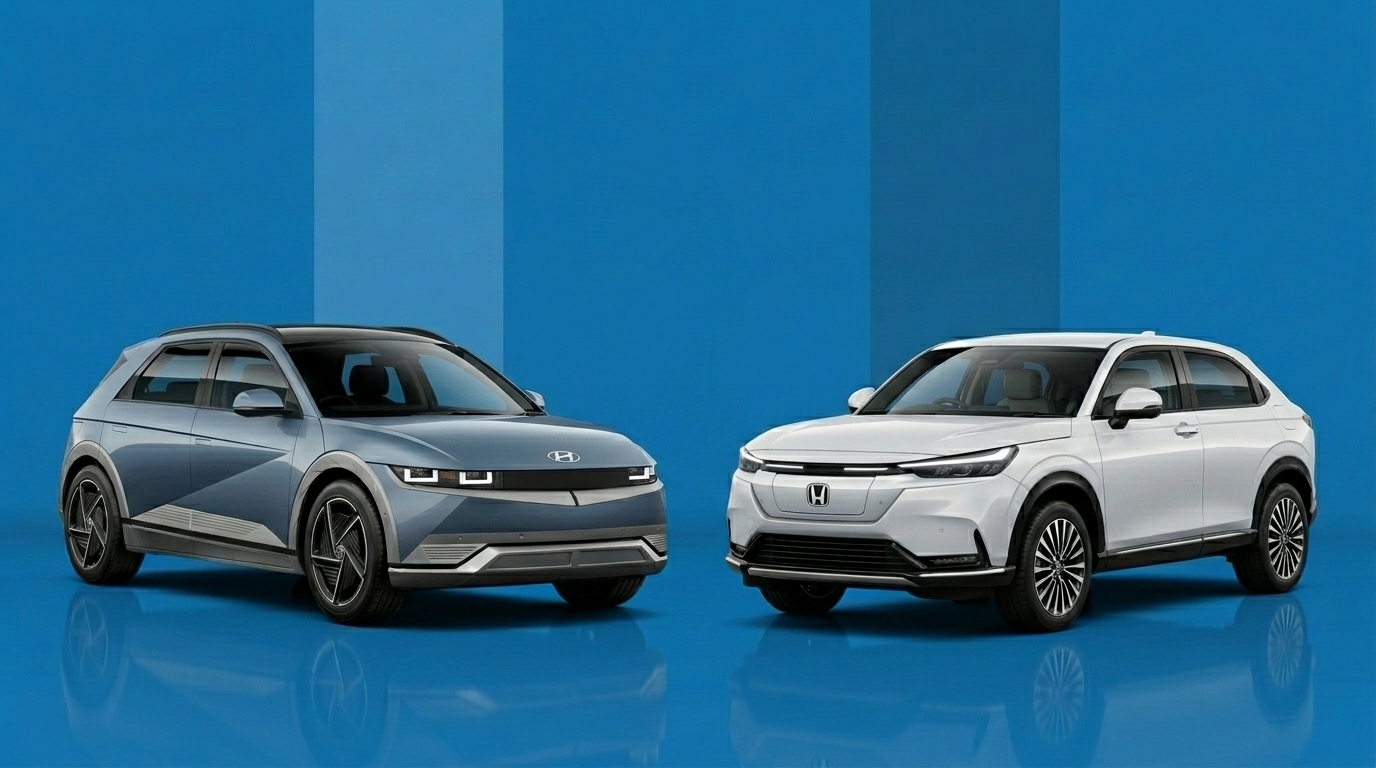 AI-generated image for illustrative purposes
The Electric Car Grant
The Electric Car Grant launched in July 2025.
In less than a year, more than 55,000 drivers have used it.
That number is growing every month as more models become eligible and more buyers realise the grant exists.
The grant works on two bands.
| |
Band 1 |
Band 2 |
| Grant amount |
£3,750 |
£1,500 |
| Criteria |
Highest sustainability standards |
Standard criteria met |
| Cars eligible |
9 models currently |
40+ models currently |
Band 1 goes to manufacturers who have verified Science-Based Targets for cutting carbon across their entire production chain.
Band 2 covers a wider range of EVs that meet the technical requirements but whose manufacturers have not yet hit the highest environmental bar in production.
To qualify, a car must be priced at or below £37,000 RRP.
There is one useful wrinkle.
If the base version of a model costs under £37,000, higher-spec versions of the same car can also qualify.
They must share the same battery and drivetrain, up to a cap of £42,000.
- Zero emissions: The car must be a pure electric vehicle producing zero tailpipe emissions.
- Minimum range: At least 100 miles.
- Warranties: A 3-year vehicle warranty and an 8-year battery warranty.
Now here is the part that surprises most people.
You do not apply for the grant.
Important: You do not need to apply for the Electric Car Grant. The dealer applies the discount automatically at the point of sale. If the car qualifies, the reduced price is what you see.
The dealer claims it from the government and passes the discount straight through to you.
No forms. No waiting. No separate process.
The scheme is funded until at least the 2028/29 financial year.
The government announced an additional £1.5 billion at the 2025 Autumn Budget to extend the scheme through to 2030.
So this is not a flash sale. It is a multi-year commitment backed by billions.
You may hear it called the plug in car grant.
That was the old scheme.
The Electric Car Grant replaced it in July 2025.
Which Cars Qualify (and How to Check)
The GOV.UK eligible vehicle list is the definitive source. It currently includes over 40 models across both bands, and new cars are added regularly as manufacturers apply.
Which JT Hughes Models Qualify?
Here are the models available from JT Hughes that currently qualify.
| Brand |
Model |
Band |
Grant |
| Band 1 — Highest sustainability standards |
| Honda |
e:Ny1 |
Band 1 |
£3,750 |
| Hyundai |
INSTER |
Band 1 |
£3,750 |
| KGM |
Torres EVX |
Band 1 |
£3,750 |
| Band 2 — Standard criteria met |
| Hyundai |
Ioniq 5 |
Band 2 |
£1,500 |
| Hyundai |
Ioniq 6 |
Band 2 |
£1,500 |
| Hyundai |
Ioniq 9 |
Band 2 |
£1,500 |
| Hyundai |
Kona |
Band 2 |
£1,500 |
| Kia |
EV4 |
Band 2 |
£1,500 |
Three of those models qualify for the higher Band 1 grant. That is £3,750 off the price before you have done anything else.
The grant is applied automatically at the point of sale. You do not need to apply separately.
The important thing to understand is that eligibility is model-specific, not dealer-specific.
The grant applies wherever you buy. What matters is whether the car you want is on the list.
We keep track of the GOV.UK portal so you do not have to. If a model you are interested in is not listed yet, we will know whether the manufacturer has applied and when a decision is expected.
Salary Sacrifice for Electric Cars
A colleague mentions they are paying £350 a month for a brand new electric car.
All-inclusive. Insurance, servicing, road tax, breakdown cover, the lot.
You are paying more than that for a three-year-old petrol car on finance.
You do the maths twice because you assume you have misheard.
That is salary sacrifice electric car schemes at work.
Your employer leases an electric car on your behalf.
The cost is deducted from your gross salary before income tax and National Insurance are calculated.
Because the deduction happens before tax, you pay less tax and less NI.
The result: a brand new EV for significantly less than if you leased it privately.
How much less depends on your tax bracket.
- Basic rate (20%): Typically saves 30-40% compared to a personal lease.
- Higher rate (40%): Saves 40-60%.
- Additional rate (45%): Can save 50-60%.
The reason the savings are so dramatic for electric cars specifically is the benefit-in-kind rate.
BIK for a pure EV is just 3% in 2025/26.
For a petrol car, BIK starts at around 25% and goes up to 37%.
That gap is what turns salary sacrifice for EVs from a nice perk into a genuinely different way of running a car.
The monthly payment typically includes everything.
In most schemes, that means the car, insurance, servicing, maintenance, road tax, and breakdown cover.
No surprise bills. No separate insurance renewal. One payment.
Real-world tip: Ask your HR department if they offer an EV salary sacrifice scheme. If they do not, many providers will set one up at no cost to the employer. It takes weeks, not months.
Now, the honest part.
What we tell people who ask us about this.
Salary sacrifice reduces your gross salary on paper.
That can affect mortgage applications, because lenders look at gross income.
It can affect statutory benefits like maternity pay or sick pay, which are calculated on your actual salary.
And if you leave your job before the lease ends, you may face early termination charges.
Most schemes now include protection against this.
None of those are reasons not to do it.
They are reasons to go in with your eyes open.
For most employees earning above £30,000, the savings are hard to argue with.
But go in informed, not surprised.
Salary sacrifice key takeaway:
A brand new EV, all-inclusive, for 30-60% less than leasing it yourself. The BIK rate at 3% is what makes the maths work. Ask your HR department.
Electric Car BIK Rates
A £40,000 electric company car costs a 20% taxpayer just £240 a year in benefit-in-kind tax.
The same value petrol car at 27% BIK would cost that same taxpayer £2,160.
That is £1,920 a year. Same list price. Same driver. Different fuel.
The electric car BIK rates are set by HMRC and confirmed through to 2029/30.
| Tax year |
EV BIK rate |
Typical petrol BIK |
| 2025/26 |
3% |
25-37% |
| 2026/27 |
4% |
25-37% |
| 2027/28 |
5% |
25-37% |
| 2028/29 |
7% |
25-37% |
| 2029/30 |
9% |
25-37% |
Yes, the rates are going up. From 3% today to 9% by 2029/30.
But look at the gap.
Even at 9%, an EV company car driver pays a fraction of what a petrol driver pays.
For a 40% taxpayer with a £40,000 EV at 9% BIK, the annual tax bill would be £1,440.
The same car as a petrol model at 27% would cost £4,320 a year.
That is still nearly £3,000 a year in your pocket. Even at the highest projected rate.
One more thing our service team always mentions.
If your employer provides electric vehicle charging at work, there is no benefit-in-kind charge for using it.
Free workplace charging means free fuel for your commute.
That is not a loophole. It is written into HMRC guidance deliberately to encourage the switch.
Businesses buying EVs also benefit from 100% first-year capital allowances.
The full purchase cost can be offset against taxable profits in year one.
There is also road tax.
New zero-emission cars registered from April 2025 pay £10 VED in the first year.
From year two, they move to the standard flat rate.
That is still cheaper than most petrol equivalents, and for salary sacrifice drivers the road tax is included in the monthly payment anyway.
It is not the biggest saving on its own. But stacked with everything else, it adds up.
BIK key takeaway:
EV company car tax: 3% now, rising to 9% by 2029/30. Petrol: 25-37%. Even at the highest projected rate, EV drivers save nearly £3,000 a year. Free workplace charging = free commute fuel with zero tax consequence.
EV Charger Grants
The short answer: If you rent your home or own a flat, you can claim up to £350 towards a home charger right now, rising to £500 from April 2026. Most homeowners with off-street parking cannot use the standard household grant, but some households with on-street parking may qualify under a separate scheme.
| Who you are |
Grant available |
Amount |
Until |
| Renter (any property) |
Yes |
£350 (£500 from April 2026) |
March 2027 |
| Flat owner |
Yes |
£350 (£500 from April 2026) |
March 2027 |
| Homeowner (house) |
No |
N/A |
Ended 2022 |
| Landlord (residential) |
Yes |
£350 (£500 from April 2026) |
March 2027 |
We should be upfront about this.
The EV charger grant, formerly known as the OZEV grant, no longer covers homeowners who own a detached, semi-detached, or terraced house.
That ended in 2022.
It catches people out. We would rather you hear it from us now than discover it halfway through planning your charger installation.
There is one exception. If you own a house but do not have a driveway, a separate £25 million government scheme helps fund cross-pavement charging solutions. These are discreet channels embedded in the pavement that let you run a cable safely from your home to a car parked on the street. This is in addition to the standard chargepoint grant.
The grant covers 75% of the cost of buying and installing a charger, up to the maximum amount.
You must use an OZEV-approved installer.
The installer currently handles the application on your behalf. From April 2026, you will apply directly through the government's Find a Grant platform instead.
From April 2026, the maximum grant increases from £350 to £500 per socket.
Applications will move to the government’s new Find a Grant platform.
If you are a homeowner who cannot claim, the typical cost of buying and installing a home charger is between £800 and £1,200.
At home charging rates of around 3-5p per mile versus 15-20p for petrol, most drivers recoup that within their first few months of ownership.
Workplace Charging Scheme
Does your employer have EV chargers in the car park?
If not, they could be claiming up to £500 per socket from the government to install them.
The workplace charging scheme covers up to 75% of the cost of buying and installing EV chargers at eligible workplaces.
It is capped at £350 per socket, rising to £500 from April 2026.
An organisation can claim for up to 40 sockets across all sites.
Businesses, charities, and public sector organisations all qualify.
The scheme runs until March 2027.
Real-world tip: Forward this article to your employer. The Workplace Charging Scheme covers most of the installation cost, and there is no benefit-in-kind charge for employees who use the chargers.
For employees, the value is simple.
If your employer installs chargers and lets you use them, you charge your car at work for free with no tax consequence.
That is your commuting fuel bill, gone.
Stacking Incentives Together
A 40% taxpayer ordering a £35,000 electric car that qualifies for the £1,500 Electric Car Grant through a salary sacrifice scheme could save over £3,000 a year compared to leasing the same car privately.
Before counting the fuel savings.
Most people look at each incentive in isolation.
The grant is one thing.
Salary sacrifice is another.
BIK is a separate calculation.
But they stack.
And the combined number is where this gets interesting.
The Electric Car Grant reduces the price of the car.
That lower price feeds into the salary sacrifice calculation, reducing your gross monthly deduction.
The BIK rate at 3% means the taxable benefit is tiny, even on a £35,000 car.
And if you charge at work for free, your running costs drop to near zero.
Here is what that looks like side by side. Same driver. Same salary. Same commute. One keeps the petrol car, the other switches to an EV on salary sacrifice (estimated figures for a 40% taxpayer).
| |
Petrol car (PCP finance) |
EV (salary sacrifice) |
| Car payment |
~£450/month |
~£352/month (net) |
| Insurance |
~£55/month |
Included |
| Servicing |
~£30/month |
Included |
| Road tax |
~£15/month |
Included |
| Fuel / charging |
~£150/month (petrol) |
~£40/month (home charging) |
| Total monthly cost |
~£700/month |
~£392/month |
That is roughly £300 a month less for a brand new car with everything included.
Over three years, that gap is over £10,000.
These are estimates. Your numbers will be different depending on your salary, tax bracket, mileage, and the car you choose.
But the shape of the comparison is the same for almost everyone we run the numbers for.
What we tell drivers considering this: sit down with the numbers.
Use your actual salary. Check your actual tax bracket.
Run the calculation for the car you actually want.
The headline percentages are useful, but your specific number is the one that matters.
You came here wondering whether you could afford to go electric.
Now you have seen the numbers.
- Purchase grant: Up to £3,750 off the price.
- Salary sacrifice: 30-60% savings vs personal leasing.
- Company car tax: A fraction of what petrol drivers pay.
- Charger grants: Up to £350 for renters and flat owners (£500 from April 2026).
- Workplace charging: Free fuel for your commute, zero tax.
These ev incentives are not temporary deals.
The Electric Car Grant is funded through to at least 2030.
BIK rates are confirmed through 2029/30.
The financial case for switching is stronger than most people expect when they first start looking.
Whether any of it makes sense for you depends on your situation. Your tax bracket, your employer, whether you rent or own, how far you drive.
But the numbers are there to be checked.
If you want help working out which incentives apply to you, we are happy to sit down and go through it. No obligation. Just the numbers.
Frequently Asked Questions
| Question |
Answer |
| Do I need to apply for the Electric Car Grant? |
No. The grant is applied automatically by the dealer at the point of sale. You see the discounted price without doing anything. |
| Can I get the grant on a used electric car? |
No. The Electric Car Grant applies only to brand new electric vehicles that meet the eligibility criteria. |
| Is the Electric Car Grant available on leased cars? |
Yes. The grant applies whether you purchase outright, take a personal lease, or use a salary sacrifice scheme. |
| Can homeowners get the EV charger grant? |
Only flat owners for the standard grant. Homeowners of detached, semi-detached, and terraced houses have been excluded since 2022. However, homeowners without a driveway may qualify for a separate cross-pavement charging grant. |
| Is salary sacrifice only for high earners? |
No. Basic rate taxpayers save around 30%. Higher earners save more (40-50%) because of higher tax rates, but the scheme works at all income levels above minimum wage. |
| How long will the Electric Car Grant last? |
The scheme is funded until at least the 2028/29 financial year. Additional funding of £1.5 billion was announced at the 2025 Autumn Budget to extend it through to 2030. |
| What happens to my salary sacrifice car if I leave my job? |
Most schemes include early termination protection. Providers will typically try to transfer the lease to a colleague or your new employer. Check your scheme terms before signing up. |
| Do electric cars pay road tax? |
New zero-emission cars pay £10 VED in the first year. From year two they pay the standard flat rate, currently £195 per year. This is still less than most petrol cars, which also pay the expensive car supplement if their list price exceeds £40,000. |